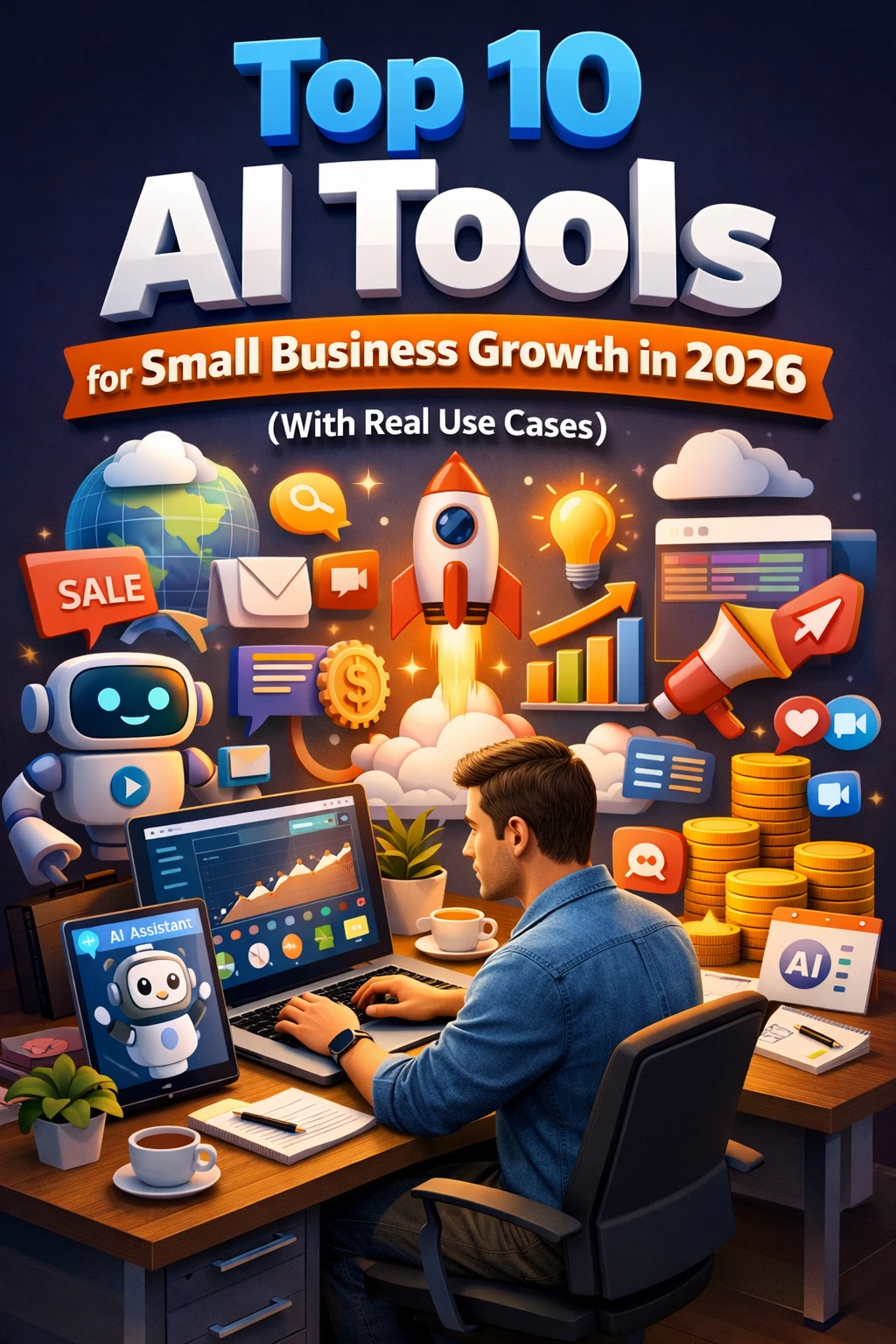
Real Use Cases
Artificial Intelligence is no longer a “future technology” — it’s the present growth engine for small businesses. In 2026, AI tools are more affordable, smarter, and easier to use than ever. What used to require large teams and budgets can now be handled by intelligent software.
From marketing and customer service to finance and operations, AI helps small businesses work faster, reduce costs, and compete with bigger companies.
If you’re a small business owner looking to grow in 2026, this guide will show you the top 10 AI tools you should know — plus real-world use cases so you can apply them immediately.
Why Small Businesses Must Use AI in 2026
Before diving into tools, let’s look at why AI adoption is exploding among small businesses:
-
Automation saves time
AI handles repetitive tasks so owners focus on strategy. -
Lower operating costs
Reduce staffing needs and human error. -
Better customer experiences
Faster responses and personalization. -
Data-driven decisions
AI analyzes trends humans might miss. -
Competitive advantage
Early adopters grow faster.
Businesses that ignore AI risk falling behind competitors who leverage smarter systems.
1. AI Chat Assistants for Customer Support
What It Does
AI chat assistants answer customer questions 24/7 on websites and social media.
Real Use Case
A small online store uses an AI chatbot to handle FAQs, order tracking, and returns. This reduces support emails by 70% and improves response time.
Benefits
-
24/7 availability
-
Instant responses
-
Reduced support workload
-
Higher customer satisfaction
2. AI Writing Tools for Content Marketing
What It Does
AI writing tools help create blog posts, product descriptions, emails, and ads.
Real Use Case
A local bakery uses AI to generate weekly blog posts and social media captions, increasing website traffic and customer engagement.
Benefits
-
Faster content creation
-
Consistent publishing
-
SEO optimization support
-
Lower marketing costs
3. AI Graphic Design Tools
What It Does
These tools create logos, ads, and social media visuals automatically.
Real Use Case
A startup uses AI design tools to produce branded Instagram posts without hiring a designer.
Benefits
-
Professional visuals
-
Time savings
-
Brand consistency
-
Budget-friendly design
4. AI Social Media Management Tools
What It Does
AI schedules posts, suggests captions, and analyzes performance.
Real Use Case
A fitness coach uses AI to schedule posts for the month and receives recommendations on best posting times.
Benefits
-
Better engagement
-
Automated posting
-
Performance insights
-
Audience growth
5. AI Email Marketing Tools
What It Does
AI personalizes subject lines, content, and send times.
Real Use Case
An eCommerce store uses AI to send personalized offers based on browsing behavior, increasing conversions.
Benefits
-
Higher open rates
-
Targeted campaigns
-
Improved ROI
-
Customer retention
6. AI Accounting & Bookkeeping Tools
What It Does
AI tracks expenses, invoices clients, and forecasts cash flow.
Real Use Case
A freelance agency uses AI bookkeeping software to auto-categorize expenses and generate reports.
Benefits
-
Fewer errors
-
Time savings
-
Financial insights
-
Better budgeting
7. AI Sales Assistants
What It Does
AI tools analyze leads and recommend follow-ups.
Real Use Case
A small SaaS company uses AI to score leads and prioritize high-value prospects.
Benefits
-
More conversions
-
Efficient sales process
-
Smart targeting
-
Revenue growth
8. AI Website Builders
What It Does
AI creates websites with layouts, copy, and images.
Real Use Case
A consultant launches a professional website in one day using AI suggestions.
Benefits
-
Quick setup
-
No coding required
-
SEO-friendly structures
-
Affordable solutions
9. AI Market Research Tools
What It Does
AI analyzes trends, competitors, and customer behavior.
Real Use Case
A small clothing brand uses AI to identify trending styles and adjust inventory.
Benefits
-
Smarter decisions
-
Reduced risk
-
Competitive insights
-
Trend forecasting
10. AI Workflow Automation Tools
What It Does
These tools connect apps and automate repetitive tasks.
Real Use Case
A real estate agent automates lead capture from forms into a CRM and follow-up emails.
Benefits
-
Less manual work
-
Fewer mistakes
-
Faster operations
-
Scalability
How to Choose the Right AI Tools
Not every AI tool fits every business. Consider:
1. Budget
Choose tools with strong ROI.
2. Ease of Use
Simple interfaces save time.
3. Integration
Ensure compatibility with existing systems.
4. Support & Updates
Reliable support matters.
Tips for Implementing AI Successfully
-
Start small
-
Train your team
-
Monitor performance
-
Adjust strategies
-
Stay updated on trends
AI works best when combined with human creativity and oversight.
Future of AI for Small Businesses
By 2026 and beyond:
-
AI will become more personalized
-
Automation will increase
-
Costs will drop further
-
Adoption will become standard
Small businesses that embrace AI now will scale faster and operate smarter.
Final Thoughts
AI is no longer optional for growth-focused small businesses. It’s a powerful partner that helps you do more with less.
Start with one or two tools from this list, measure results, and expand gradually. The earlier you adapt, the stronger your competitive edge.
The future belongs to small businesses that work smart — and AI is the smartest tool available.