Introduction
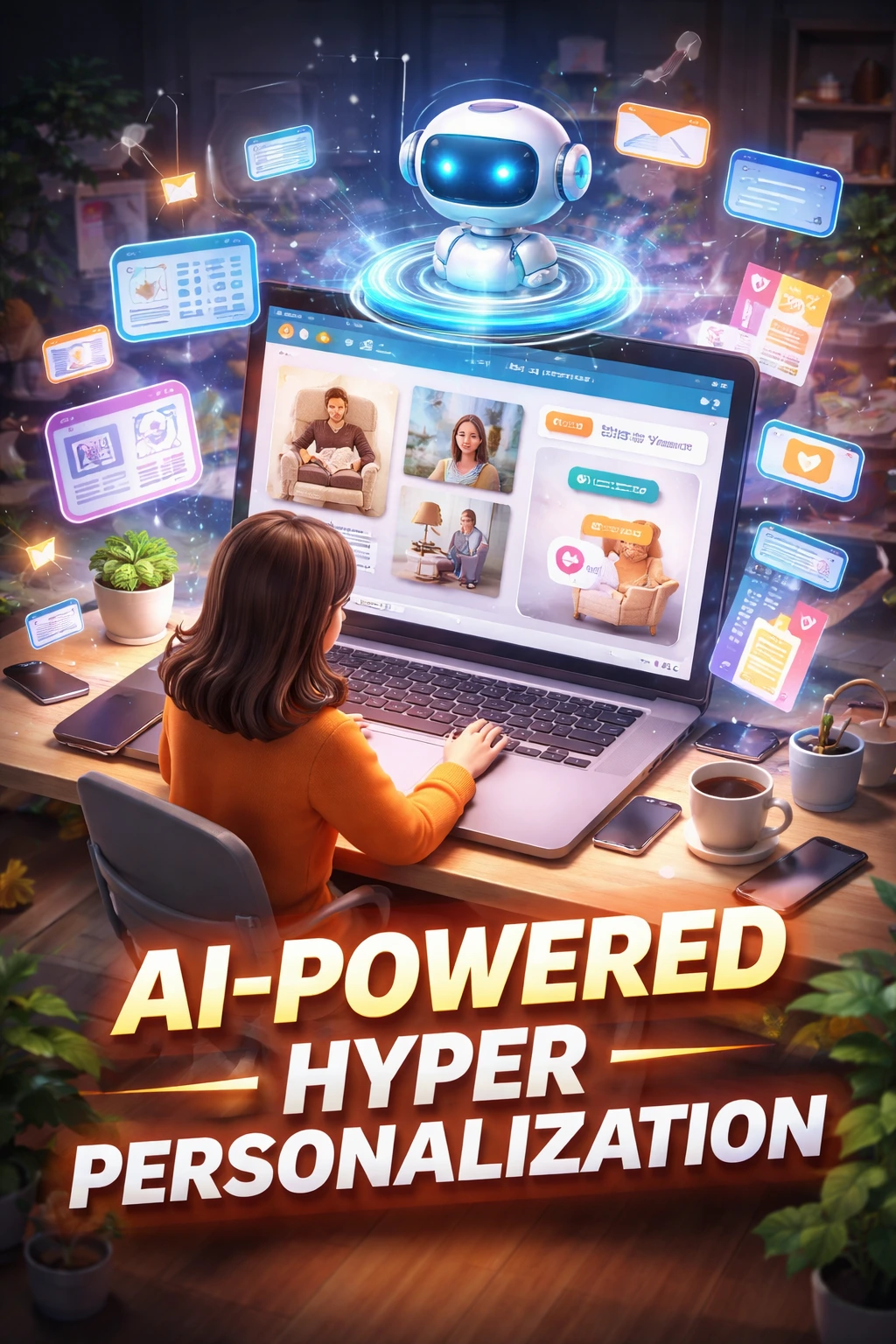
Marketing has evolved dramatically over the past decade. What once relied on broad messaging and generic campaigns has now shifted toward something far more powerful: hyper-personalization powered by artificial intelligence (AI).
Today’s consumers expect brands to understand them—what they like, what they need, and even what they might want next. This shift has given rise to a new era of marketing often described as “mass one-to-one marketing.”
But how is it possible to personalize experiences for millions of users at once?
The answer lies in AI.
In this guide, you’ll learn:
-
What AI-powered hyper-personalization really means
-
How it works behind the scenes
-
Real-world examples you see every day
-
Tools you can use right now
-
How to implement it on your own website (like gistrol.com)
-
SEO and monetization strategies
What Is AI-Powered Hyper-Personalization?
Hyper-personalization is the use of AI, machine learning, and real-time data to deliver highly relevant and individualized experiences to each user.
Unlike traditional personalization (like using a customer’s name in an email), hyper-personalization goes deeper:
-
Recommends content based on behavior
-
Predicts future actions
-
Adapts in real-time
-
Creates unique journeys for each user
Simple Example
Instead of:
“Hello John, check out our latest products.”
Hyper-personalization says:
“Hey John, based on your recent interest in AI tools, here are 3 productivity apps you’ll love.”
That’s the difference between generic marketing and intelligent, AI-driven marketing.
Why Hyper-Personalization Matters in 2026
Consumers are overwhelmed with content. Attention is limited. Competition is everywhere.
Hyper-personalization solves this by making content:
-
More relevant
-
More engaging
-
More actionable
Key Benefits
1. Higher Conversion Rates
Personalized experiences convert better because they match user intent.
2. Better User Experience
Users feel understood, not marketed to.
3. Increased Engagement
Relevant content keeps users on your site longer.
4. Stronger Brand Loyalty
People trust brands that “get them.”
How AI Enables Mass One-to-One Marketing
AI makes personalization scalable. Without AI, it would be impossible to tailor content for thousands or millions of users.
Here’s how it works:
1. Data Collection
AI collects data from:
-
Website behavior
-
Search history
-
Click patterns
-
Time spent on pages
-
Device and location
2. User Profiling
AI builds a profile for each user:
-
Interests
-
Preferences
-
Buying behavior
-
Engagement patterns
3. Predictive Analysis
AI predicts:
-
What the user will click next
-
What they might buy
-
What content will keep them engaged
4. Real-Time Personalization
Content changes instantly based on user behavior:
-
Homepage layout
-
Blog recommendations
-
Product suggestions
-
Email content
Real-World Examples of Hyper-Personalization
You already interact with AI personalization daily—even if you don’t realize it.
1. Streaming Platforms
They recommend movies based on your viewing history.
2. E-commerce Stores
They show products based on your browsing behavior.
3. Social Media Feeds
They tailor your feed to your interests.
4. Email Marketing
Emails are customized based on your past interactions.
Types of Hyper-Personalization You Can Use
Let’s break down practical ways to implement this on your blog or website.
1. Content Recommendations
Show users articles based on what they’ve already read.
Example for gistrol.com:
-
If someone reads “AI Tools,” show more AI tools content.
2. Dynamic Landing Pages
Change what users see based on:
-
Location
-
Device
-
Traffic source
3. Smart Email Campaigns
Send emails based on:
-
User actions
-
Interests
-
Time zones
4. Chatbots with AI
Use AI chatbots to:
-
Answer questions
-
Recommend content
-
Guide users
5. Personalized CTAs (Call-To-Actions)
Instead of:
“Subscribe Now”
Use:
“Get Your Free AI Tools Cheat Sheet”
Best AI Tools for Hyper-Personalization
Here are some powerful tools you can use:
1. ChatGPT / AI Writing Tools
-
Generate personalized content
-
Create dynamic blog recommendations
2. Email Automation Platforms
-
Segment users
-
Send behavior-based emails
3. Website Personalization Tools
-
Show different content to different users
4. Analytics Tools
-
Track user behavior
-
Improve targeting
How to Implement Hyper-Personalization on Gistrol.com
Let’s make this practical.
Step 1: Track User Behavior
Use tools like:
-
Google Analytics
-
Heatmaps
Track:
-
Popular posts
-
Exit pages
-
Time on page
Step 2: Segment Your Audience
Create groups like:
-
Beginners in AI
-
Bloggers
-
Entrepreneurs
-
Marketers
Step 3: Recommend Related Posts
At the end of each blog post:
-
Show 3–5 related articles
Step 4: Offer Lead Magnets
Examples:
-
AI Beginner Roadmap
-
Top AI Tools Cheat Sheet
-
Weekly AI Tips
Step 5: Use Email Personalization
Send emails like:
-
“Based on what you read, here’s more…”
SEO Benefits of Hyper-Personalization
Hyper-personalization isn’t just good for users—it’s powerful for SEO.
1. Lower Bounce Rate
Users stay longer because content is relevant.
2. Higher Time on Site
More engagement signals quality to search engines.
3. Better CTR (Click-Through Rate)
Personalized recommendations increase clicks.
4. Improved Rankings
Search engines reward user satisfaction.
Challenges of AI Personalization
It’s not all perfect. There are challenges:
1. Data Privacy
Users care about how their data is used.
2. Over-Personalization
Too much personalization can feel creepy.
3. Technical Complexity
Requires tools and setup.
4. Cost (Initially)
Some tools may require investment.
Best Practices for Safe and Effective Personalization
1. Be Transparent
Tell users how you use their data.
2. Start Simple
Begin with basic recommendations.
3. Focus on Value
Personalization should help—not annoy.
4. Optimize Continuously
Test and improve regularly.
Future of Hyper-Personalization
AI is evolving rapidly. Here’s what’s coming:
1. Predictive Experiences
AI will anticipate needs before users act.
2. Voice & Conversational Personalization
More interaction through voice assistants.
3. Real-Time Content Creation
AI will generate content instantly for each user.
4. Fully Automated Marketing Funnels
Entire marketing journeys run by AI.
Monetization Opportunities
Hyper-personalization can significantly increase your income:
1. Affiliate Marketing
Recommend products users are likely to buy.
2. Ad Revenue (AdSense)
Better engagement = higher earnings.
3. Digital Products
Sell personalized guides or templates.
4. Email Marketing Funnels
Turn readers into paying customers.
Action Plan (Start Today)
If you want to implement this quickly:
-
Add related posts to every article
-
Create a lead magnet
-
Start collecting emails
-
Use AI to generate personalized content
-
Analyze user behavior weekly
Conclusion
AI-powered hyper-personalization is no longer optional—it’s the future of digital marketing.
By leveraging AI, you can:
-
Deliver better experiences
-
Increase engagement
-
Boost conversions
-
Grow your website faster
Whether you’re running a blog like gistrol.com or building an online business, mastering mass one-to-one marketing will give you a serious competitive edge.
Check our post on 👉🏿 How to Speed Up Your Workflow Using Simple AI Techniques